

 Image 1 of 1
A free field note for painters.
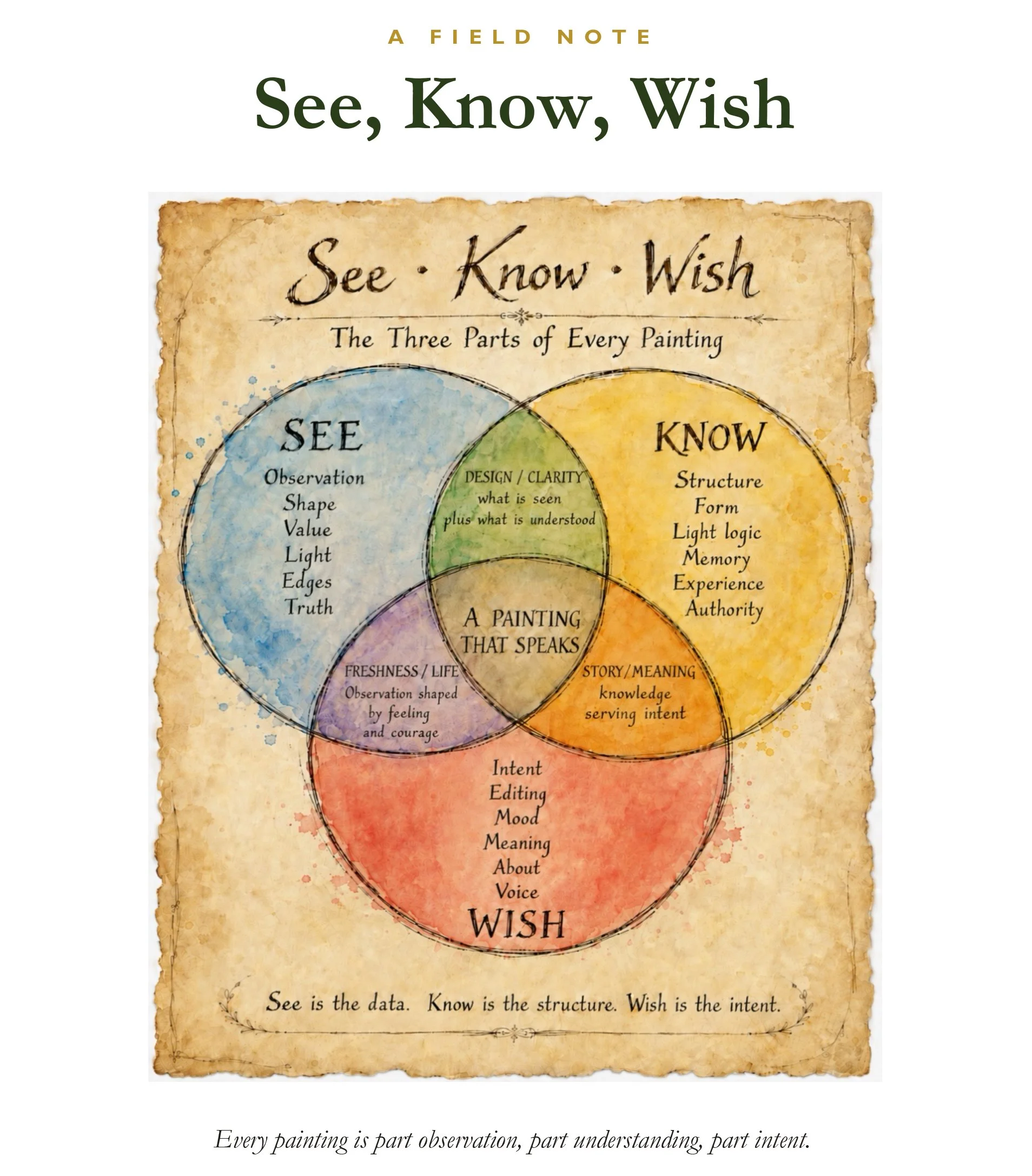
Every painting is built from three things:
What you see.
What you know.
What you wish you saw.
Seeing is observation. The shapes, values, colors, edges, light, and relationships in front of you.
Knowing is understanding. Everything experience has taught you about design, perspective, materials, and how paintings work.
Wishing is intent. What you want to emphasize, change, simplify, remember, or make the viewer feel.
Most painters become strong at seeing and knowing first.
Wishing grows more slowly because it rests on the other two. But it is also where the painting begins to become yours.
Without intent, a painting can become an accurate report of the subject.
With intent, it becomes a response.
This free two-page field note shows how observation, understanding, and artistic intent work together.
It explains why the balance changes as your skill develops and what happens when a painting reaches for an effect that its observation or understanding cannot yet support.
It also includes a five-minute exercise you can use with your most recently finished painting.
The exercise will help you recognize which of the three is carrying the work, which one may be missing, and what your next painting needs from you.
Download it. Print it. Mark it up.
Keep it near your easel or fold it into your paint box. Read it before your next start or use the exercise when reviewing a painting that feels accurate but not yet personal.
This is a free digital download. No physical copy will be shipped.
A free field note for painters.
Every painting is built from three things:
What you see.
What you know.
What you wish you saw.
Seeing is observation. The shapes, values, colors, edges, light, and relationships in front of you.
Knowing is understanding. Everything experience has taught you about design, perspective, materials, and how paintings work.
Wishing is intent. What you want to emphasize, change, simplify, remember, or make the viewer feel.
Most painters become strong at seeing and knowing first.
Wishing grows more slowly because it rests on the other two. But it is also where the painting begins to become yours.
Without intent, a painting can become an accurate report of the subject.
With intent, it becomes a response.
This free two-page field note shows how observation, understanding, and artistic intent work together.
It explains why the balance changes as your skill develops and what happens when a painting reaches for an effect that its observation or understanding cannot yet support.
It also includes a five-minute exercise you can use with your most recently finished painting.
The exercise will help you recognize which of the three is carrying the work, which one may be missing, and what your next painting needs from you.
Download it. Print it. Mark it up.
Keep it near your easel or fold it into your paint box. Read it before your next start or use the exercise when reviewing a painting that feels accurate but not yet personal.
This is a free digital download. No physical copy will be shipped.