

 Image 1 of 1
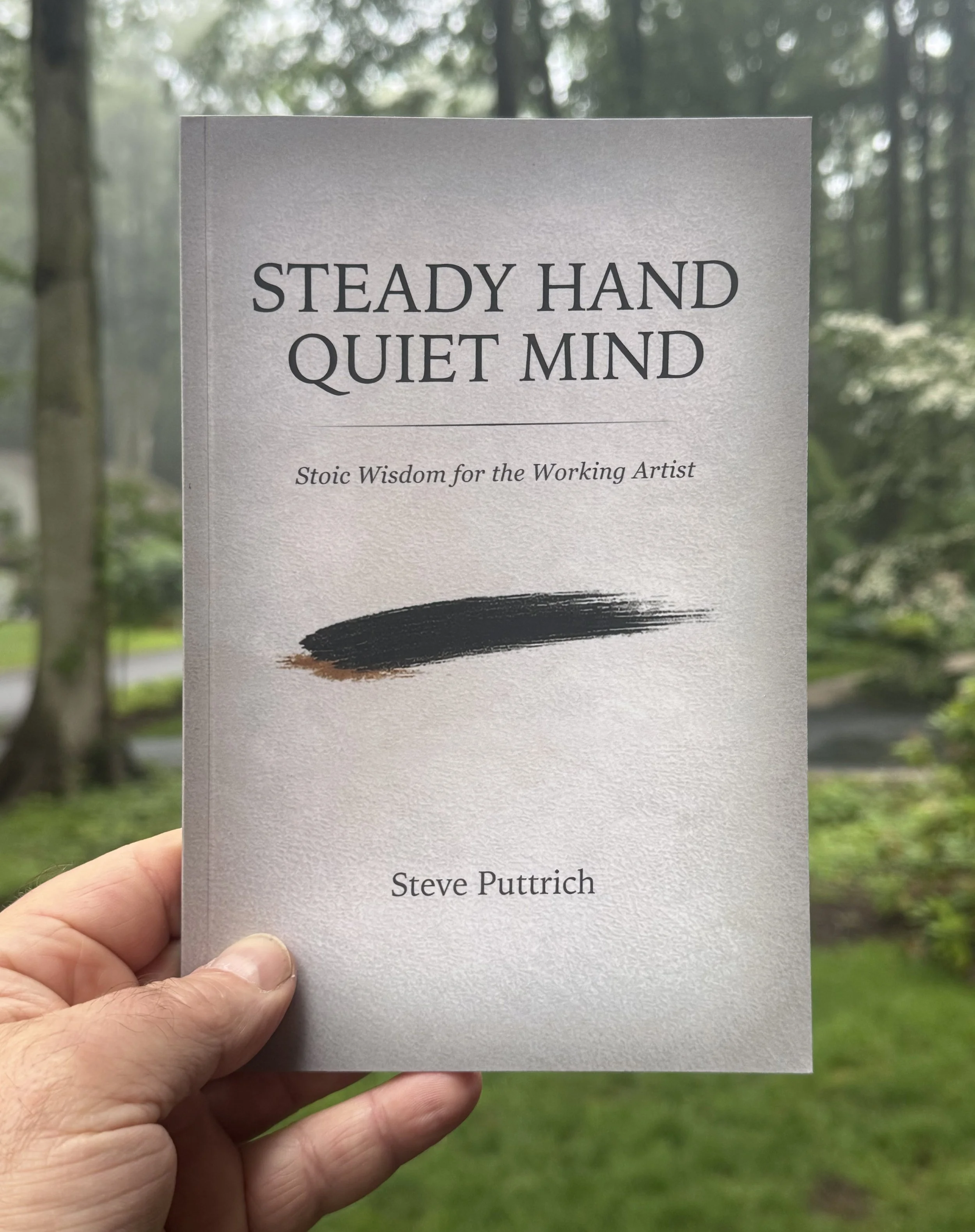
Stoic wisdom for the working artist.
$19.95
The hardest part of painting isn’t mixing the color or getting the drawing right.
Those things yield to practice.
The hardest part is everything that happens between your ears: comparison, fear of starting, the need to control the outcome, the urge to overwork, praise that inflates, and criticism that wounds.
Skill matters. But skill alone doesn’t steady the person holding the brush.
Marcus Aurelius wrote Meditations during years marked by war, illness, responsibility, and loss.
He wasn’t writing for an audience. He was reminding himself how to remain steady when circumstances, other people, and his own thoughts pulled him away from what mattered.
I found those pages and began carrying their ideas into the studio and the field.
What can I control here?
What must I release?
What does the work require now?
Steady Hand, Quiet Mind grew from those questions.
This book takes some of the most durable ideas from Marcus Aurelius and translates them into the language of paint, light, uncertainty, and the daily work of making something true.
It considers how an artist can focus when the mind wanders, begin before confidence arrives, let go of what cannot be controlled, simplify without becoming timid, endure a dry season, and respond wisely to both praise and criticism.
It also addresses the quiet danger of overworking: the moment when effort stops serving the painting and begins serving our need to keep doing something.
The goal isn’t to become indifferent to the work.
It is to care deeply without being ruled by every result.
This isn’t a history of Stoicism or a collection of clever quotations.
It is a practical book for artists who want to work with greater calm, clarity, endurance, and self-command.
Read it slowly.
Mark it up. Keep a highlighter nearby. Write in the margins. Leave it close to the easel and return to the chapters that meet you where the struggle is.
You won’t need every lesson every day.
Some days you will need the courage to begin.
Some days you will need the restraint to stop.
Some days you will need to accept that one difficult painting doesn’t get to define the artist making it.
The aim isn’t perfection.
It is steadiness.
A hand calm enough to make the next mark.
A mind quiet enough to see what the painting needs.
Then pick up the brush again.
Stoic wisdom for the working artist.
$19.95
The hardest part of painting isn’t mixing the color or getting the drawing right.
Those things yield to practice.
The hardest part is everything that happens between your ears: comparison, fear of starting, the need to control the outcome, the urge to overwork, praise that inflates, and criticism that wounds.
Skill matters. But skill alone doesn’t steady the person holding the brush.
Marcus Aurelius wrote Meditations during years marked by war, illness, responsibility, and loss.
He wasn’t writing for an audience. He was reminding himself how to remain steady when circumstances, other people, and his own thoughts pulled him away from what mattered.
I found those pages and began carrying their ideas into the studio and the field.
What can I control here?
What must I release?
What does the work require now?
Steady Hand, Quiet Mind grew from those questions.
This book takes some of the most durable ideas from Marcus Aurelius and translates them into the language of paint, light, uncertainty, and the daily work of making something true.
It considers how an artist can focus when the mind wanders, begin before confidence arrives, let go of what cannot be controlled, simplify without becoming timid, endure a dry season, and respond wisely to both praise and criticism.
It also addresses the quiet danger of overworking: the moment when effort stops serving the painting and begins serving our need to keep doing something.
The goal isn’t to become indifferent to the work.
It is to care deeply without being ruled by every result.
This isn’t a history of Stoicism or a collection of clever quotations.
It is a practical book for artists who want to work with greater calm, clarity, endurance, and self-command.
Read it slowly.
Mark it up. Keep a highlighter nearby. Write in the margins. Leave it close to the easel and return to the chapters that meet you where the struggle is.
You won’t need every lesson every day.
Some days you will need the courage to begin.
Some days you will need the restraint to stop.
Some days you will need to accept that one difficult painting doesn’t get to define the artist making it.
The aim isn’t perfection.
It is steadiness.
A hand calm enough to make the next mark.
A mind quiet enough to see what the painting needs.
Then pick up the brush again.