

 Image 1 of 1
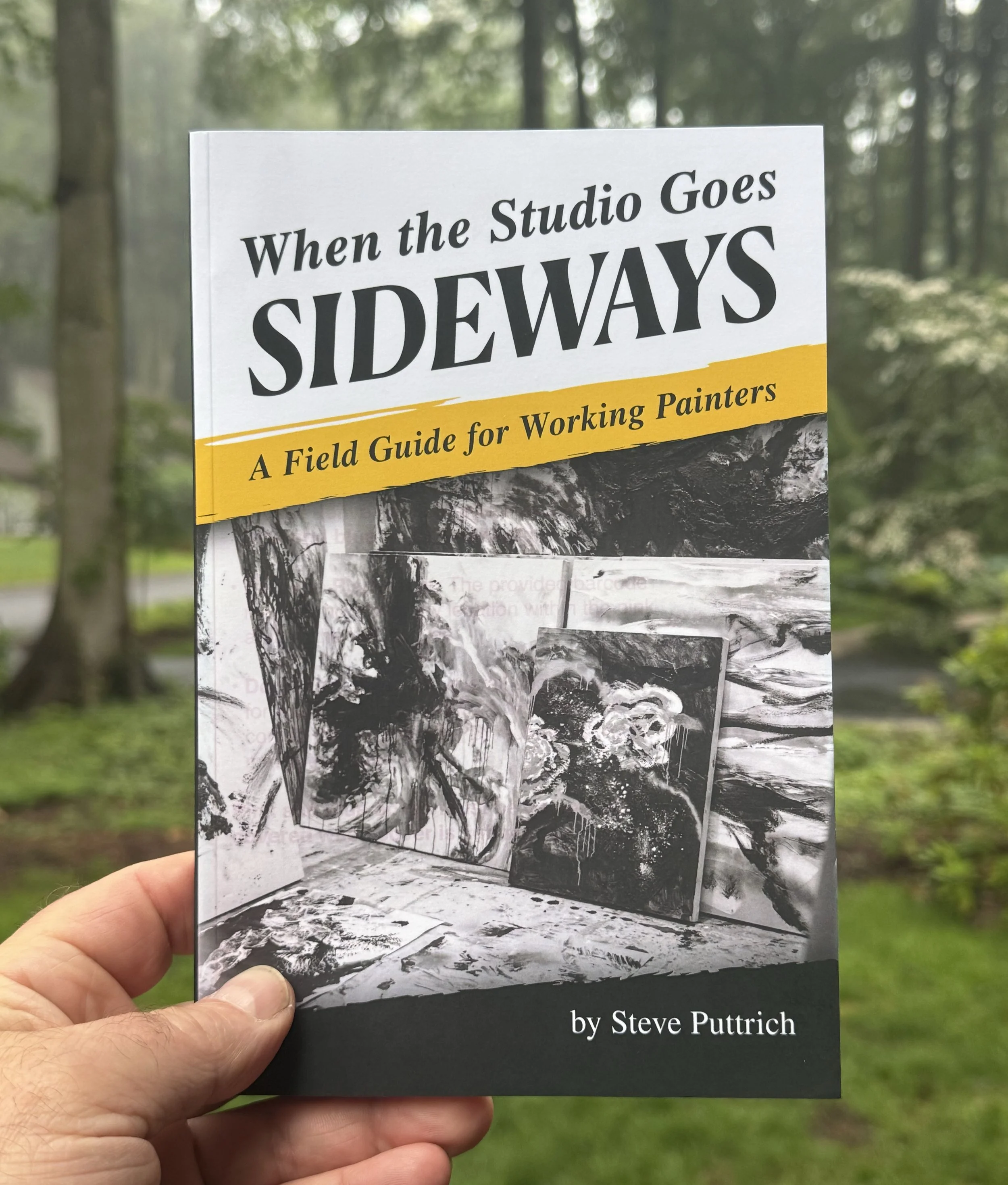
When the Studio Goes Sideways A Field Guide for Working Painters
The Studio Reset Series, Book One
Every working painter has had the morning. You wake up ready to paint. The coffee is made. The panel is waiting. And something is wrong, and you cannot name it, and twenty minutes later you are standing there feeling like a fraud who has forgotten how to do the thing you have done a thousand times.
This book is for that morning. And for the afternoon when the painting that started strong has turned into mud. For the week you have not been in the studio because life got loud. For the month you can still paint but cannot remember why.
Steve Puttrich has been walking into studios where something is wrong for forty-five years. This field guide is how he diagnoses the trouble and resets it. Eight chapters that move from the outside in: the room, the routine, the mind, the canvas, the life, and the source. Each one ends with practical fixes you can try tomorrow morning and a short list of questions worth sitting with.
It is built to be used, not just read. Mark it up. Fold the corners. Carry it to the easel. Most studio trouble is not a talent problem. It is a room problem, a routine problem, or a problem with the person in the chair. All of them are workable.
Read it once straight through. Then keep it within reach for the next time the studio goes sideways. Which it will.
When the Studio Goes Sideways A Field Guide for Working Painters
The Studio Reset Series, Book One
Every working painter has had the morning. You wake up ready to paint. The coffee is made. The panel is waiting. And something is wrong, and you cannot name it, and twenty minutes later you are standing there feeling like a fraud who has forgotten how to do the thing you have done a thousand times.
This book is for that morning. And for the afternoon when the painting that started strong has turned into mud. For the week you have not been in the studio because life got loud. For the month you can still paint but cannot remember why.
Steve Puttrich has been walking into studios where something is wrong for forty-five years. This field guide is how he diagnoses the trouble and resets it. Eight chapters that move from the outside in: the room, the routine, the mind, the canvas, the life, and the source. Each one ends with practical fixes you can try tomorrow morning and a short list of questions worth sitting with.
It is built to be used, not just read. Mark it up. Fold the corners. Carry it to the easel. Most studio trouble is not a talent problem. It is a room problem, a routine problem, or a problem with the person in the chair. All of them are workable.
Read it once straight through. Then keep it within reach for the next time the studio goes sideways. Which it will.