

 Image 1 of 1
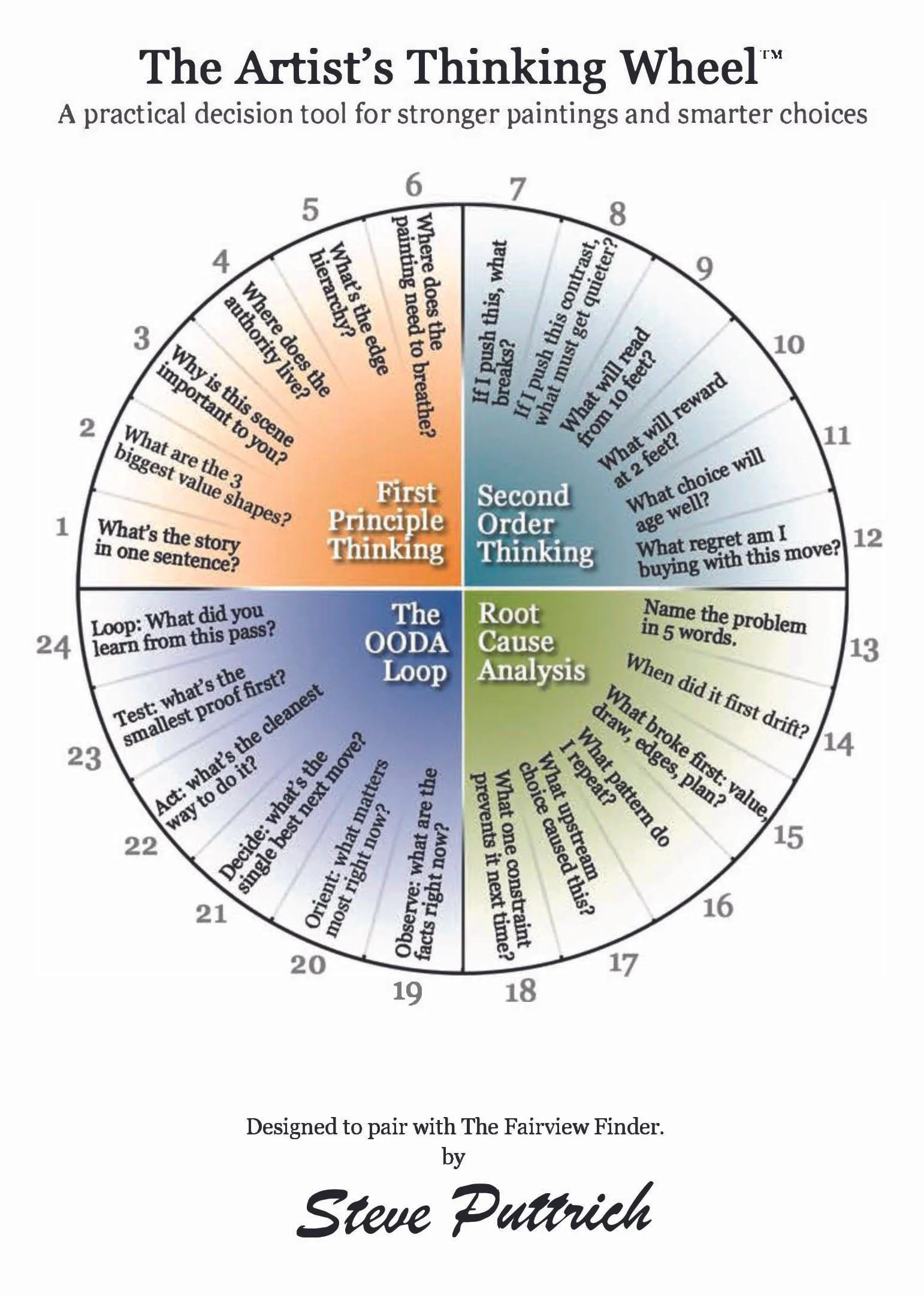
The Artist's Thinking Wheel
The cover and back pages of The Artist’s Thinking Wheel are included with every Fairview Finder. This $10 digital download gives you the complete 27-page printable booklet.
The Fairview Finder helps you frame a stronger scene before you begin. The Artist’s Thinking Wheel helps you decide what to do next when you or the painting begins to drift.
One prompt. One move. Momentum with clarity.
This is a digital download. No physical booklet will be shipped. Print it double-sided and select “Flip on short edge” in your printer settings.
When You Don’t Know What to Do Next
Painters get stuck. Not just beginners. Everyone.
You’re standing in front of a painting that isn’t working, and you don’t know why. You keep adding things. The painting gets busier and weaker at the same time.
You can feel the problem, but you can’t name it. Without a name, you don’t know what to fix.
I’ve been there more times than I want to count.
I created The Artist’s Thinking Wheel to help me find a useful way forward. It isn’t a formula or another set of rules. It is a decision-making tool made from honest questions.
Find the question that matches the problem. Ask it. Make one good move. Then look again.
Four Ways Back to Clarity
First Principles Thinking
Return to the essentials before making another mark.
What is the story in one sentence? What are the three largest value shapes? Where does the highest contrast belong?
These aren’t warm-up questions. They determine whether the painting has a clear reason for being.
To name something is to take responsibility for it. Artists who can name what they’re painting tend to paint it with greater clarity.
Second-Order Thinking
Consider what your next move will cost.
Painters love to add more contrast, texture, color, detail, and effort. But every addition changes something else.
If the focal area becomes stronger, another area may need to step back. If everything shouts, nothing is heard.
Restraint isn’t weakness. It makes the important things visible.
Root Cause Analysis
Trace the problem back to where it began.
The visible trouble may have appeared late, but the cause often came earlier: a weak crop, an unclear value plan, a misplaced focal point, or no clear story from the start.
You can’t always repaint your way out of a planning problem. But you can find it, name it, and learn from it.
That lesson carries into the next painting.
The OODA Loop
Turn thinking into action.
Observe. Orient. Decide. Act.
Make a small move. Look at what changed. Learn from the result before deciding what comes next.
This keeps you from freezing, flailing, or reworking parts of the painting that were already alive.
A Tool for Thoughtful Painters
I believe painters are stewards of what they see, not tourists.
A tourist looks at everything and understands little. A steward pays attention, discovers what matters, and acts with care.
We didn’t make the light on the water or the way a face can hold weariness and dignity at the same time. We find it. We choose it. We arrange it on the surface so someone else can see it too.
That is serious work, and beautiful work.
Good design gives clarity. Story gives meaning. Freshness gives life.
None of them flourish in confusion. They need structure. They need a way back when the painting starts to drift.
The Artist’s Thinking Wheel is that way back.
Choose the quadrant that matches your problem.
Find one prompt.
Make one move.
Then look again.
The cover and back pages of The Artist’s Thinking Wheel are included with every Fairview Finder. This $10 digital download gives you the complete 27-page printable booklet.
The Fairview Finder helps you frame a stronger scene before you begin. The Artist’s Thinking Wheel helps you decide what to do next when you or the painting begins to drift.
One prompt. One move. Momentum with clarity.
This is a digital download. No physical booklet will be shipped. Print it double-sided and select “Flip on short edge” in your printer settings.
When You Don’t Know What to Do Next
Painters get stuck. Not just beginners. Everyone.
You’re standing in front of a painting that isn’t working, and you don’t know why. You keep adding things. The painting gets busier and weaker at the same time.
You can feel the problem, but you can’t name it. Without a name, you don’t know what to fix.
I’ve been there more times than I want to count.
I created The Artist’s Thinking Wheel to help me find a useful way forward. It isn’t a formula or another set of rules. It is a decision-making tool made from honest questions.
Find the question that matches the problem. Ask it. Make one good move. Then look again.
Four Ways Back to Clarity
First Principles Thinking
Return to the essentials before making another mark.
What is the story in one sentence? What are the three largest value shapes? Where does the highest contrast belong?
These aren’t warm-up questions. They determine whether the painting has a clear reason for being.
To name something is to take responsibility for it. Artists who can name what they’re painting tend to paint it with greater clarity.
Second-Order Thinking
Consider what your next move will cost.
Painters love to add more contrast, texture, color, detail, and effort. But every addition changes something else.
If the focal area becomes stronger, another area may need to step back. If everything shouts, nothing is heard.
Restraint isn’t weakness. It makes the important things visible.
Root Cause Analysis
Trace the problem back to where it began.
The visible trouble may have appeared late, but the cause often came earlier: a weak crop, an unclear value plan, a misplaced focal point, or no clear story from the start.
You can’t always repaint your way out of a planning problem. But you can find it, name it, and learn from it.
That lesson carries into the next painting.
The OODA Loop
Turn thinking into action.
Observe. Orient. Decide. Act.
Make a small move. Look at what changed. Learn from the result before deciding what comes next.
This keeps you from freezing, flailing, or reworking parts of the painting that were already alive.
A Tool for Thoughtful Painters
I believe painters are stewards of what they see, not tourists.
A tourist looks at everything and understands little. A steward pays attention, discovers what matters, and acts with care.
We didn’t make the light on the water or the way a face can hold weariness and dignity at the same time. We find it. We choose it. We arrange it on the surface so someone else can see it too.
That is serious work, and beautiful work.
Good design gives clarity. Story gives meaning. Freshness gives life.
None of them flourish in confusion. They need structure. They need a way back when the painting starts to drift.
The Artist’s Thinking Wheel is that way back.
Choose the quadrant that matches your problem.
Find one prompt.
Make one move.
Then look again.